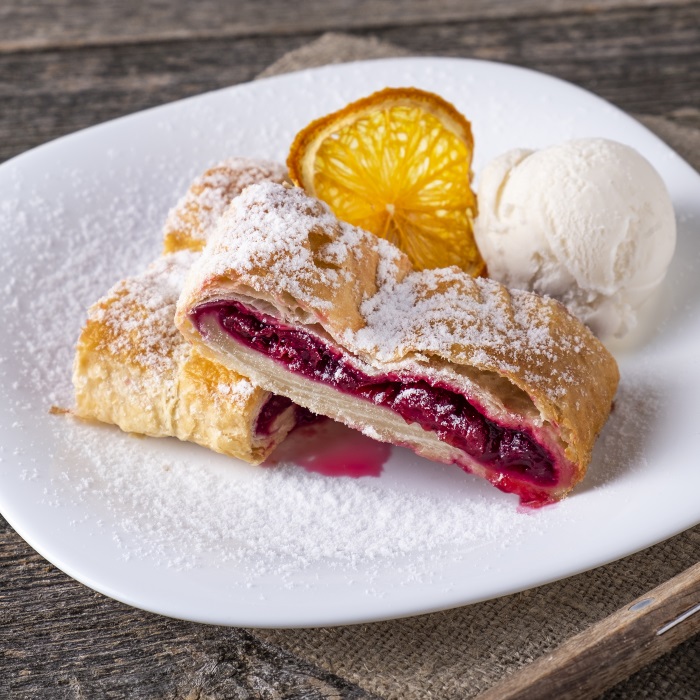
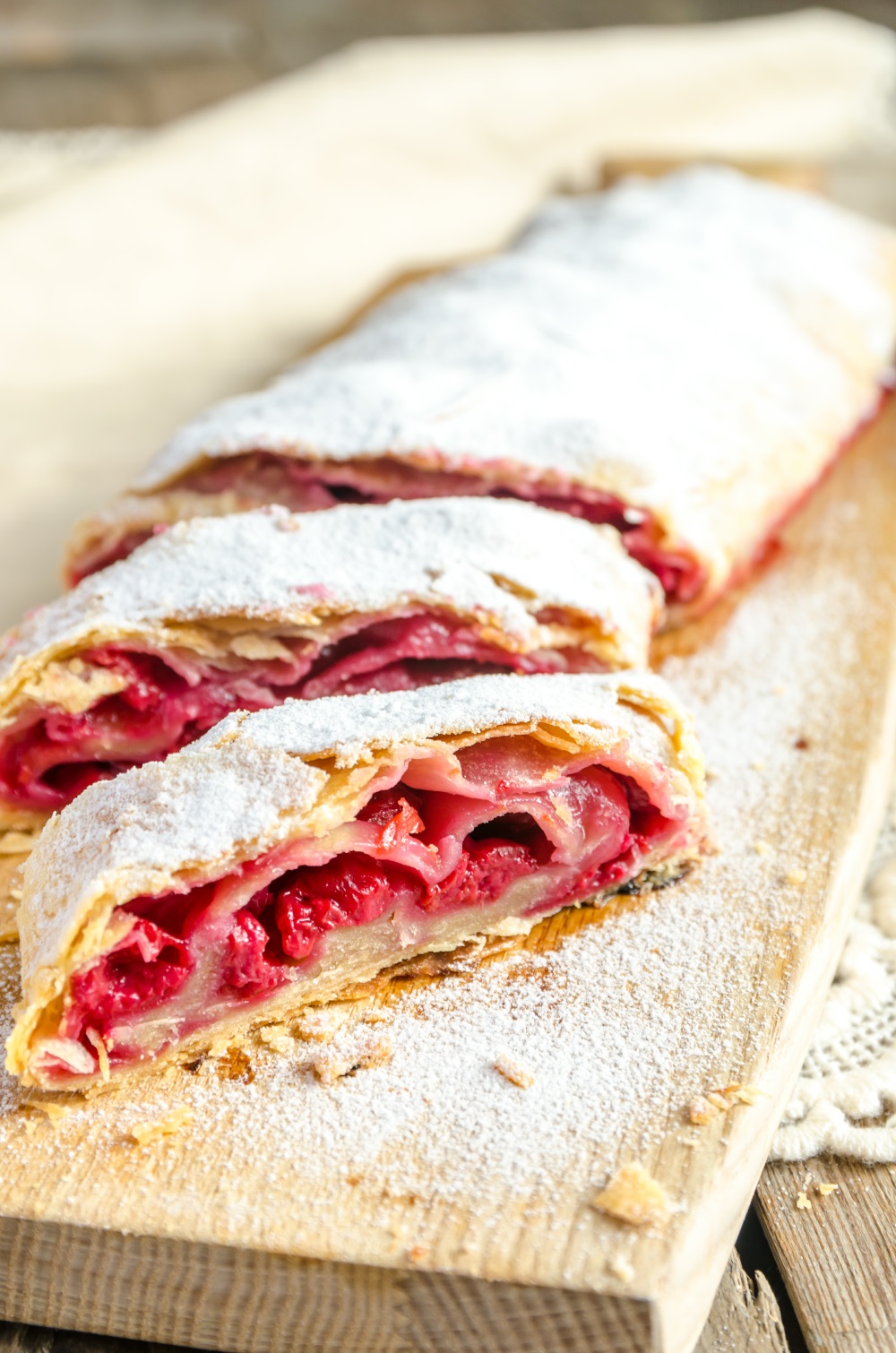
These mini fruit strudels are a great way to use up any jam or preserves you have in the cupboard. The dough is easy to make from scratch, no store-bought puff pastry needed, and each little pastry gets a drizzle of vanilla icing. Cherry, strawberry, apricot, or whatever you have open will work just fine.
The dough needs just flour, water, oil, and a pinch of salt before it’s stretched thin, filled, and baked until lightly golden. Add the glaze for a homemade take on classic toaster strudels, perfect for breakfast with coffee or a sweet afternoon treat.
Why You’ll Love These Mini Strudels
- Homemade dough: No puff pastry required, just flour, water, oil, and salt.
- Flexible fillings: Use apple, cherry, strawberry, raspberry, or another thick fruit preserve.
- Simple ingredients: The dough uses everyday pantry staples.
- Optional vanilla glaze: Drizzle it over the pastries for a sweeter, toaster-strudel-style finish.
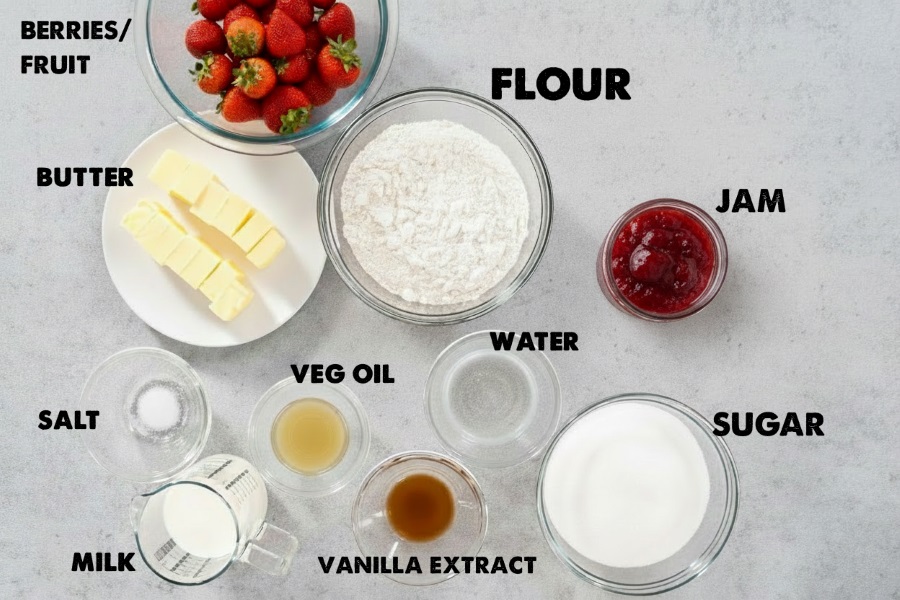
Ingredients You’ll Need
For the Dough
- 250 g all-purpose flour
- A pinch of salt
- 30 ml vegetable oil, plus a little extra for coating
- 125 ml warm water
- Melted butter for brushing, optional
For the Filling
- Approximately 120 g thick jam, fruit preserves, or fruit compote
Choose a filling that holds its shape rather than one that runs easily. If using a loose compote, drain excess liquid or cook it briefly until thickened. Let it cool before assembling the pastries.
For the Optional Vanilla Glaze
- 120 g powdered sugar
- 2 to 3 tablespoons milk
- ½ teaspoon vanilla extract
Add the milk gradually until the glaze reaches a consistency suitable for drizzling.
How To Make Homemade Strudel Without Puff Pastry
1. Make the Dough
Combine the flour and salt in a mixing bowl. Add the warm water and vegetable oil, stirring until a rough dough forms.
Transfer the dough to a lightly floured work surface and knead for 8 to 10 minutes, until smooth and elastic. If it feels slightly sticky, use only a small amount of additional flour.
Shape the dough into a ball and coat it lightly with oil. Cover and let it rest for 30 minutes at room temperature. This resting time relaxes the gluten, making the dough easier to stretch without shrinking back.
2. Prepare the Filling
If your jam or fruit compote is runny, transfer it to a small saucepan and cook over low heat, stirring frequently, until some of the excess moisture evaporates. Avoid scorching the fruit.
Allow the filling to cool completely before using it. A thick filling is easier to enclose and less likely to escape during baking.
3. Stretch the Dough Thin
Place the rested dough on a clean kitchen towel lightly dusted with flour. Roll it out first with a rolling pin, then gently stretch it with your hands, working from the center toward the edges.
Continue until the dough is very thin and nearly translucent. Work slowly to avoid tearing it. If it repeatedly springs back, cover it and let it rest for another 5 to 10 minutes before continuing.
For extra flavor, brush the stretched dough lightly with melted butter. This is optional and does not create the same laminated layers as puff pastry.
4. Fill and Shape the Pastries
Cut the stretched dough into rectangles of approximately 8 × 10 cm. Keep the pieces covered with a clean towel while working so they do not dry out.
Place a small spoonful of filling on one half of each rectangle, leaving a clear border around the edges. Fold the dough over the filling to form a smaller rectangle.
Press the edges together firmly. Fold the edges inward if needed, then press with a fork to help seal them. Avoid overfilling, since excess jam can leak out during baking.
Transfer the pastries to a parchment-lined baking sheet, leaving a little space between each one. If desired, brush the tops lightly with melted butter.
5. Bake Until Lightly Golden
Preheat the oven to 200°C conventional heat. Bake the pastries for approximately 15 to 20 minutes, checking toward the end of the baking time.
They are ready when the dough looks dry, feels crisp at the edges, and has turned lightly golden. Larger or thicker pastries may need additional time.
Transfer to a wire rack and allow them to cool slightly before glazing.
6. Add the Vanilla Glaze
Whisk the powdered sugar, vanilla extract, and 2 tablespoons of milk in a small bowl. Add more milk a little at a time until the glaze is smooth and easy to drizzle.
Drizzle over the slightly cooled pastries. Let the glaze set before serving.
Tips for Better Results
Let the dough rest. Skipping the resting period can make the dough harder to stretch and more likely to shrink back.
Keep the filling thick. Excess liquid can soften the pastry and cause the seams to open during baking.
Avoid overfilling. A small amount of jam is easier to seal inside than a generous spoonful.
Stretch gently. Thin dough can tear if pulled too forcefully. Small tears are manageable, but larger holes may allow the filling to escape.
Seal the edges well. Press the dough firmly together around the filling, especially at the corners.
Don’t expect puff pastry layers. This dough produces a thin, crisp strudel-style shell rather than the tall, distinct layers of laminated pastry.
Variations
Apple cinnamon: Use thick apple compote with cinnamon and a little sugar. Make sure the apples are tender and the mixture is not watery.
Cherry: Use thick cherry preserves or well-drained cherry filling.
Mixed berries: Raspberry, strawberry, or mixed-berry preserves work well when thick enough to hold their shape.
Cream cheese and jam: Combine a small amount of softened cream cheese with the jam. Keep the mixture thick and avoid overfilling.
Savory pastries: Replace the sweet filling with a thick cheese mixture or cooked vegetables that have been cooled and drained well. Omit the sweet glaze.
Serving Suggestions
Serve the pastries with coffee or tea for breakfast, brunch, or an afternoon snack. The vanilla-glazed version also works as a simple dessert, especially alongside fresh fruit or a scoop of vanilla ice cream. Or use a real syrup like my homemade elderberry syrup I made last year.
Storage
Store completely cooled, unglazed pastries in an airtight container at room temperature for up to 1 to 2 days, provided the filling is suitable for room-temperature storage. Refrigerate fillings that require refrigeration.
The pastries will gradually lose some crispness during storage. Reheat them in an oven at 160 to 170°C for a few minutes to help restore their texture. Allow them to cool slightly before adding fresh glaze.
For freezing, first test the method with a small batch. Arrange assembled, unbaked pastries in a single layer on a tray and freeze until firm before transferring them to a freezer-safe container. Bake from frozen only if the pastry cooks through evenly in your oven; otherwise, thaw in the refrigerator before baking. Check that the centers are fully cooked.
Yield
This recipe is intended to make approximately 6 to 8 mini pastries, depending on how thinly the dough is stretched and how the rectangles are cut. The final yield should be confirmed when testing the recipe with the stated dimensions and filling quantity.
Frequently Asked Questions
Can I use store-bought dough instead?
Yes. Puff pastry can be used for a different result, with more pronounced buttery layers and a lighter, puffier structure. Follow the package directions for shaping and baking, since the timing may differ from this homemade dough. Though, homemade will give a more authentic feel to your pastry.
Why does my strudel dough keep shrinking?
The gluten may need more time to relax. Cover the dough and let it rest for another 5 to 10 minutes before stretching it again. Avoid pulling too hard.
Can I make the dough vegan?
Yes. The dough itself contains no dairy or eggs when made with vegetable oil and water. Use oil instead of butter for brushing and plant-based milk for the glaze.
Can I prepare the pastries ahead of time?
You can prepare the dough and filling ahead of assembly. Keep the dough covered so it does not dry out, and refrigerate the filling if necessary. For the best texture, bake the assembled pastries close to serving time.
Homemade strudel without puff pastry recipe
Share on Facebook Share by EmailIngredients
- Dough
- 250 grams all purpose flour
- Pinch of salt
- 30 milliliters vegetable oil
- 125 milliliters warm water
- Optional melted butter
- Filling
- Half cup jam fruit preserve, or fruit compote
- Glaze optional
- 1 cup powdered sugar
- 2 to 3 tablespoons milk
- Half teaspoon vanilla extract
Instructions
- Make the Dough
- Mix flour, salt, warm water, and oil until a rough dough forms. Knead eight to ten minutes until smooth and elastic. Shape into a ball, lightly oil, cover, and rest thirty minutes.
- Prepare the Filling
- Use any jam or compote. If it is runny, warm gently to thicken and let it cool.
- Stretch the Dough
- Place dough on a floured towel and stretch it slowly with your fingers and knuckles until very thin. Brush with melted butter if you like.
- Fill and Shape
- Place a line of filling along one edge, roll or fold the dough over it, and cut into rectangles. Seal the edges with your fingers or a fork.
- Bake
- Heat oven to 200 degrees Celsius. Place pastries on a parchment lined tray and bake fifteen to twenty minutes until golden.
- Glaze (Optional)
- Whisk powdered sugar, milk, and vanilla until smooth and drizzle over warm pastries.
Notes
| Nutrient | Per serving |
|---|---|
| Calories | 190 kcal |
| Carbohydrates | 34 g |
| Protein | 3 g |
| Fat | 5 g |
| Saturated fat | 1 g |
| Sugar | 17 g |
| Fiber | 1 g |
| Sodium | 55 mg |