
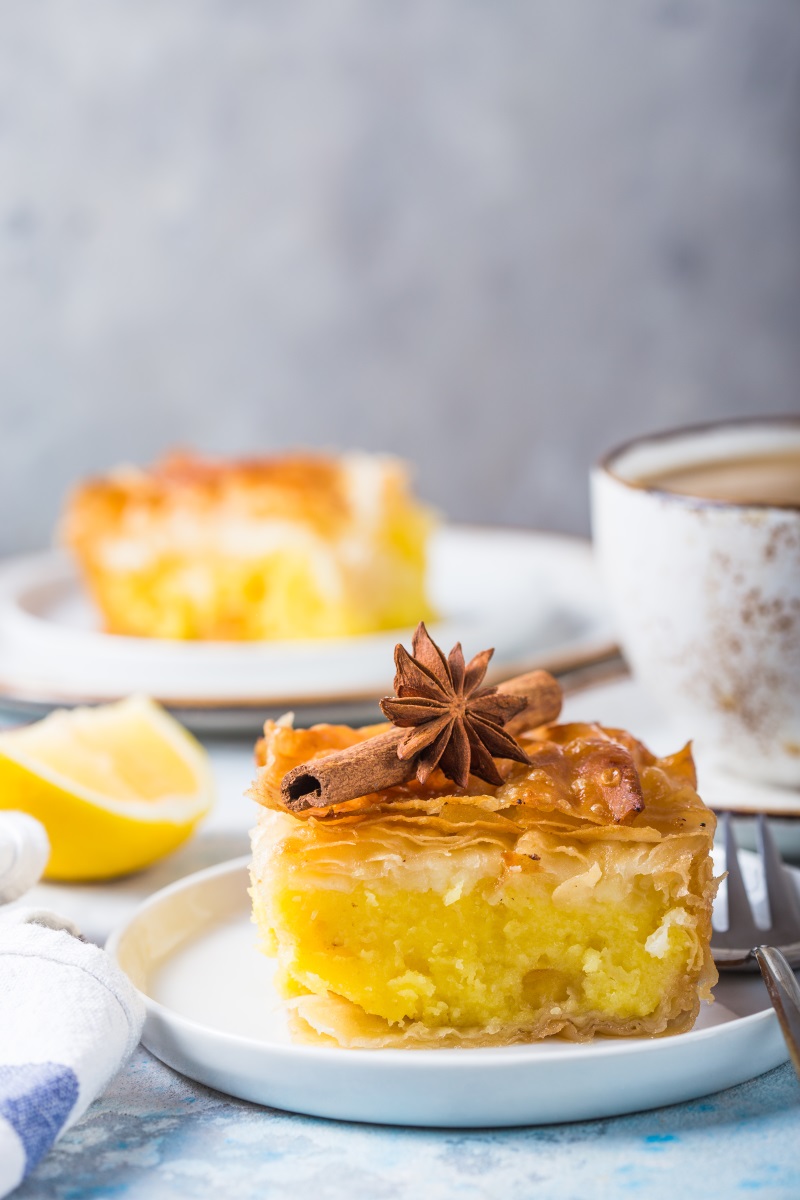
Galaktoboureko is one of my favorite Greek desserts, with crisp, buttery phyllo, creamy semolina custard, and lemon-scented syrup. It takes a little time to layer the pastry, but the ingredients are simple, and the result is well worth it.
With roots in Asia Minor, galaktoboureko became part of Greek cooking through cultural exchange and the arrival of refugees. Its name means “milk pie,” referring to its rich custard filling.
Like baklava, it uses layers of phyllo and syrup, but the semolina custard sets it apart. It’s also different from bougatsa, another Greek custard pastry, which is usually served without syrup. Lemon and vanilla are classic flavorings, while mastiha adds a distinctive Greek touch.
I like to make the syrup first and let it cool before pouring it over the hot pastry. This helps the layers absorb the syrup without becoming overly soft. Butter gives the phyllo its familiar rich flavor, and you can adjust the sweetness to your taste.
Follow along for my homemade galaktoboureko recipe, and if you enjoy making pastry, try my homemade strudel too.
How To Make A Traditional Greek Galaktoboureko At Home
This version has less sugar, more balance and wonderful contrast between crunchy phyllo and silky cream.
Ok, let’s make it together.
Main ingredients you need
- Phyllo dough – The secret to those delicate, crispy golden layers that crackle beautifully with every bite.
- Semolina – Gives the custard its creamy texture while keeping it rich and slightly dense.
- Milk – The base of the filling, making the cream soft, silky, and comforting.
- Butter – Brushed between every layer for that rich flavor and delicate flaky finish.
- Lemon – Adds freshness to the syrup and balances the sweetness with a light citrus touch.
- Cinnamon – Often infused into the syrup for a warm, subtle spice that pairs perfectly with the cream.
- Eggs – Helps create a custard that’s smooth, creamy, and beautifully set after baking.
- Sugar syrup – The final touch that soaks into the pastry and gives galaktoboureko its signature taste and sweetness.
Preparation
Now comes the fun part.
First, start with the syrup
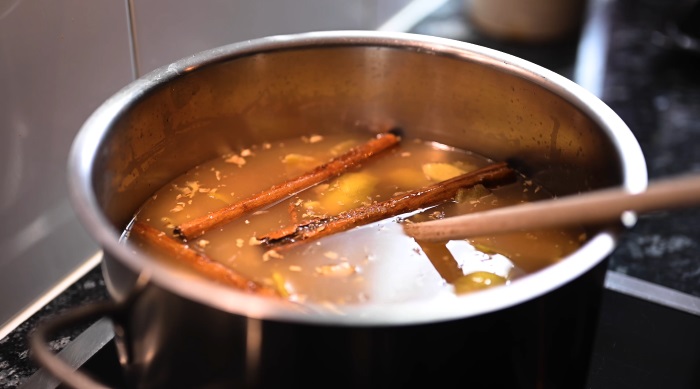
In a saucepan, combine the sugar, water, glucose or honey, cinnamon sticks, lemon slices, and zest. Bring everything to a gentle boil, then remove from heat and let it cool completely.
Then, make the cream
In a heavy bottom saucepan, pour the milk and add your flavoring. Lemon zest, vanilla, or mastiha all work beautifully.
Heat over medium until it just starts to boil, then remove from heat.
In a separate bowl, whisk the eggs, egg yolk, sugar, semolina, and salt. Slowly add a ladle of the hot milk while whisking. This step prevents the eggs from cooking too quickly.
Pour everything back into the saucepan.
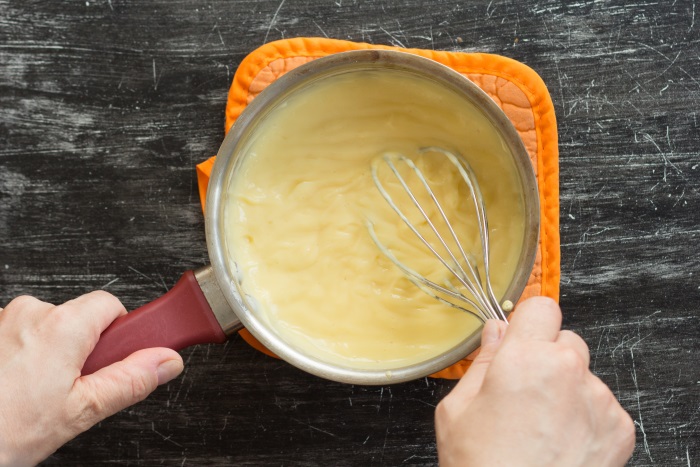
Return to medium heat and stir constantly. Do not stop here. The cream will slowly thicken and become smooth and rich. The custard is ready when it coats the back of a spoon and holds soft ribbons while stirring. It keeps thickening a little as it cools, so don’t panic if it seems loose at first.
Once thick, remove from heat and add the butter and lemon zest. Stir until fully melted and glossy. Fresh lemon zest makes a huge difference here compared to bottled or artificial flavoring.
Assembly
Preheat your oven to 180°C.
Butter your baking dish generously.
Lay half of the phyllo sheets in the dish, one by one, brushing each layer with melted butter. Don’t rush this part. This is where the crisp magic happens.
Pour the cream evenly over the base.
Cover with the remaining phyllo sheets, again buttering each layer. Even slightly imperfect phyllo layering still turns out delicious once baked and syruped.
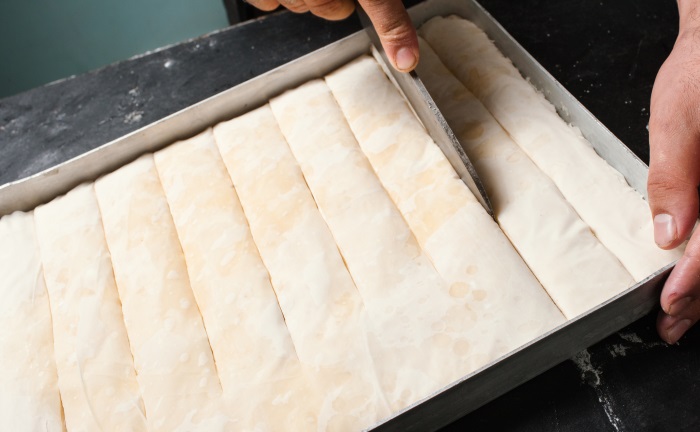
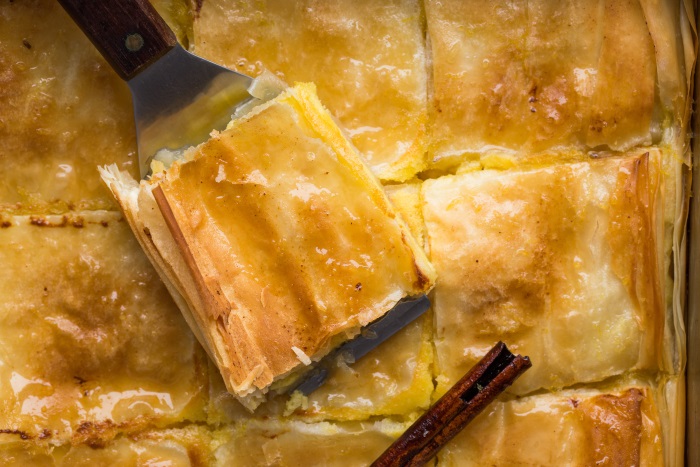
Before baking, lightly score the top layers into squares or rectangles, just like baklava. This makes slicing much easier later and helps the syrup settle beautifully into every piece without crushing the crisp phyllo.
Trim any excess edges for a clean finish.
Bake for about 30 minutes, until the top turns light brown and crisp. Your kitchen should smell nice cozily sweet, and lightly citrusy by the time the top turns deep golden. A slightly darker top usually means better flavor and crispier phyllo.
The final touch
As soon as the galaktoboureko comes out of the oven, pour the cold syrup evenly over the hot pastry. You can actually hear the syrup crackle softly as it sinks into the hot phyllo.
This is essential. Hot and cold creates a texture that feels just right where the top stays crisp while the inside absorbs just enough sweetness.
Let it rest for at least 2 hours before serving.
For individual portions
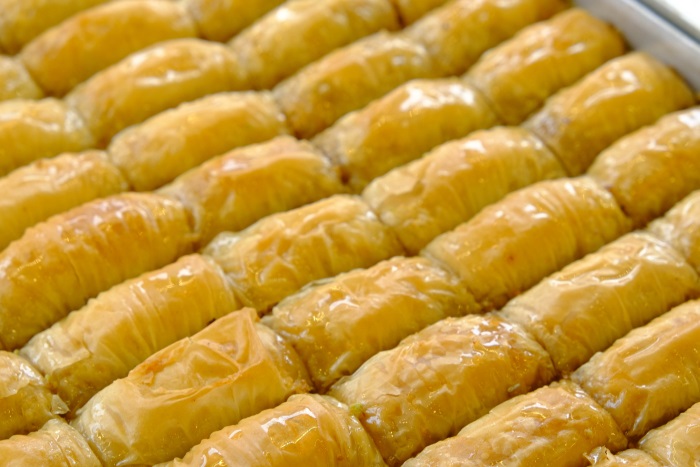
Cut the phyllo sheets lengthwise.
Place 2 spoonfuls of cream along one edge, fold the sides inward, and roll tightly.
Arrange the rolls in a buttered tray, seam side down.
Brush with butter and bake at 160°C for about 30 minutes until golden.
Pour cold syrup over them right after baking and let cool.
It should look like this:
Serving
Sprinkle with cinnamon and icing sugar just before serving.
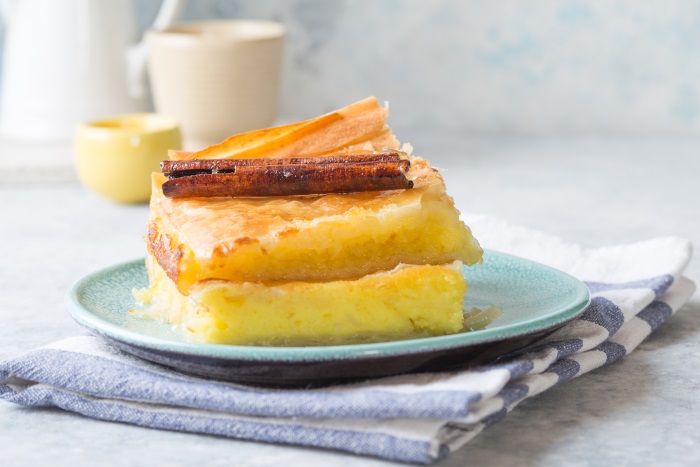
The result should be a yummy pastry that’s crispy on top, soft and creamy inside, lightly fragrant with lemon or mastiha.
From experience I can tell you galaktoboureko tastes even better with coffee or strong Greek tea, so make sure you give it a try.
Storage
Galaktoboureko keeps well in the fridge for 2 to 3 days. The phyllo softens slightly over time, but many people actually love it that way.
You can reheat slices gently in the oven to bring back some crispness.
Galaktoboureko Without Semolina
If you don’t have semolina or simply prefer an extra silky custard, you can still make a delicious galaktoboureko without it. The texture becomes softer, smoother, and more similar to a rich vanilla cream filling.
Instead of semolina, use cornstarch or flour to thicken the custard.
A simple substitute works well:
- 80 g cornstarch instead of semolina
- or 100 g all purpose flour
The process stays almost the same. Heat the milk first, whisk the eggs with sugar and cornstarch, then slowly combine everything and cook gently until thick and glossy.
The custard will look smoother and slightly lighter in texture compared to traditional semolina galaktoboureko, but it still pairs beautifully with crispy buttered phyllo and lemon syrup.
A few tips if making it without semolina:
- Stir constantly because cornstarch thickens quickly
- Keep the heat medium-low to avoid lumps
- Let the custard cool slightly before assembling
- Add a little extra vanilla for a richer bakery-style flavor
Some people actually prefer this version because the filling feels more delicate and creamy, especially when chilled overnight.
Common mistakes to avoid
- Pouring hot syrup onto cooled pastry
- Underbaking the phyllo
- Not stirring the custard enough
- Using cold filling on delicate phyllo
- Skipping the resting time
Greek galaktoboureko recipe
Share on Facebook Share by EmailIngredients
- Syrup
- 500 g sugar 300 g white, 200 g raw
- 300 g water
- 2 tbsp glucose or honey
- 2 cinnamon sticks
- 1 lemon sliced
- Zest of 1 lemon
- Cream
- 1 L milk
- 50 g sugar
- 130 g fine semolina
- 3 eggs + 1 yolk
- 2 vanillins or 1 tsp mastiha
- Pinch of salt if using unsalted butter
- Zest of 1 small lemon
- 50 g butter
- Assembly
- 1 pack phyllo dough
- 150 g butter melted
- Serving
- Cinnamon
- Icing sugar
Instructions
- Make syrupSimmer all syrup ingredients for a few minutes. Remove and cool completely.
- Make creamHeat milk with flavoring until just boiling.
- Whisk eggs, sugar, semolina, and salt. Slowly add some hot milk, then return everything to the pot.
- Cook over medium heat, stirring constantly, until thick.
- Remove from heat, stir in butter and zest.
- AssemblePreheat oven to 180°C.
- Butter dish. Layer half the phyllo, brushing each sheet with butter.
- Add cream.
- Top with remaining phyllo, buttering each layer. Trim edges.
- BakeBake 30 minutes until golden.
- FinishPour cold syrup over the hot galaktoboureko pastry.
- Rest at least 2 hours before serving.
Notes
- Calories: ~630 kcal
- Carbohydrates: ~95 g
- Sugar: ~59 g
- Fat: ~23 g
- Protein: ~11 g
- Fiber: ~1 g
- Sodium: depends heavily on butter and phyllo used
A Few Tips From My Kitchen
- Always prepare the syrup first so it has time to cool
- Don’t skip buttering each phyllo layer
- Semi salted butter adds depth and prevents overpowered sweetness
- Let it rest properly before cutting, it slices much cleaner
- You can prepare it ahead and keep it in the fridge for a couple of days
- Use whole milk if possible for a richer custard.
- Keep phyllo covered with a slightly damp towel while working so it doesn’t dry out.
- Fine semolina gives the smoothest texture.
As you can see filo dough is super versatile and used in both sweet and savory recipes. If you like working with it, there are plenty of other options to try. Bougatsa is very close, with the same creamy filling but without the syrup. Baklava is another classic, filled with nuts and soaked in syrup. And if you want something a bit different, kataifi offers a similar syrupy sweetness with a more shredded, crunchy feel.
I hope this traditional Greek galaktoboureko recipe brings a bit of warmth into your life today.
